For general cleaning and for machining of hard and brittle material; cheapest of non-traditional
Applications and Products
Applications
- Industries: electronics (for dealing with fragile silicon and germanium components), glass (brittle material), in cleaning in various industries
- Operations: general machining operations (cleaning, trimming, deburring, surface finishing, etching, cutting, milling, drilling, boring) for hard and brittle material, glass machining (abrading and frosting glass), cleaning (cleaning of glass smears on ceramics and oxides on metals and resistive coating), deburring (deburring of plastics)
- Materials: most suitable for brittle and heat-resistive material (quartz, sapphire, mica, ceramics, etc.); used in deburring of plastics
Products
- Cleaning of products and machining of material
Advantages and Disadvantages
Advantages
- Thin sections of hard and brittle material can be easily machined
- Low damage depth (2.5 microns)
- High quality surface finish
- Surface is automatically cleaned prior to cutting
- Low initial capital cost (compared to other non-traditional machining processes), maintenance cost, and operation cost
Disadvantages
- Nozzle wear is high and life is limited
- Low MRR and low capacity
- Process pollutes the environment and a dust collection system is a basic requirement
- Abrasives could get embedded in the workpiece (especially with soft materials)
Working Principle
- Indentation of high-velocity air/gas and abrasives mixture with the workpiece causes erosion and microfractures that removes the material
- Pressure energy Kinetic energy
Schematic
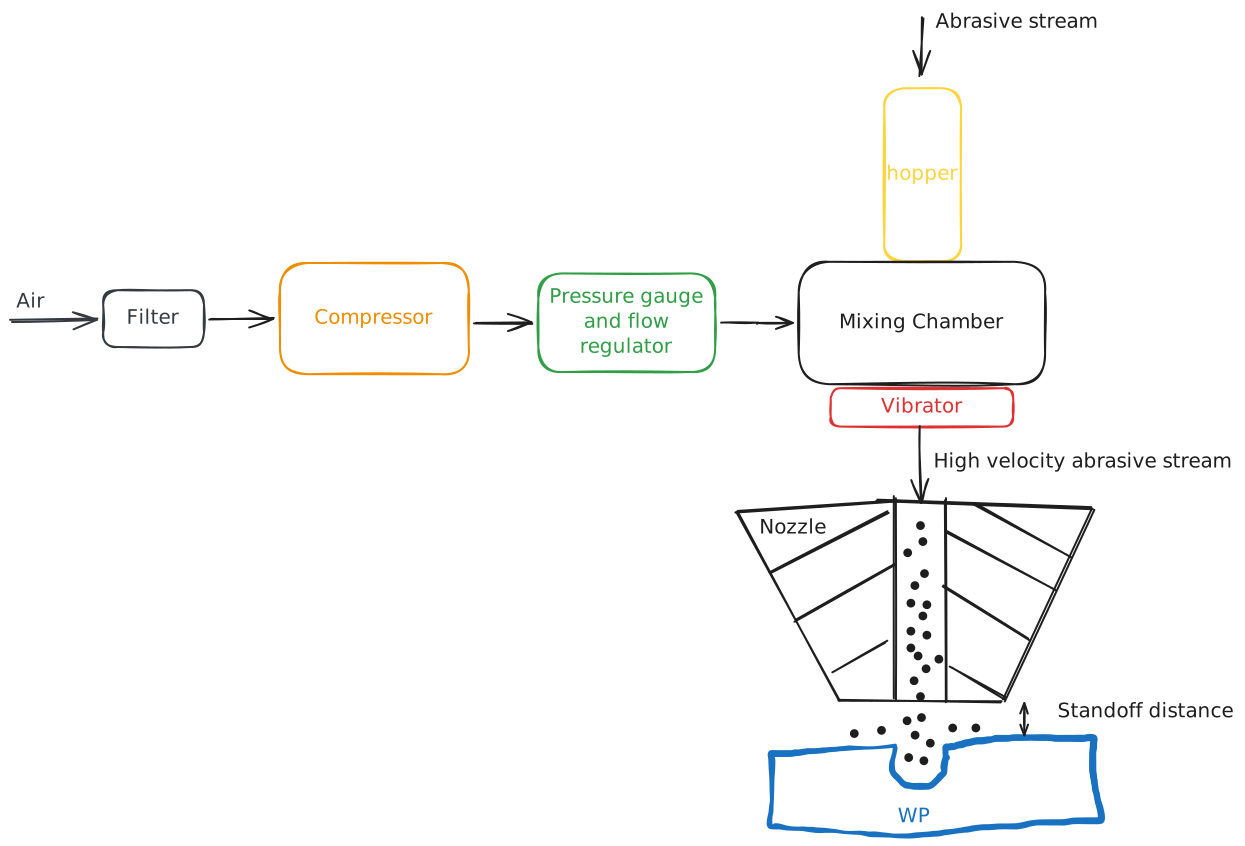
Process
Process Output Criteria
- MRR
- Geometry and surface finish
- Nozzle wear rate
Process Parameters
- Gas jet
- Gas type (air, carbon dioxide, nitrogen)
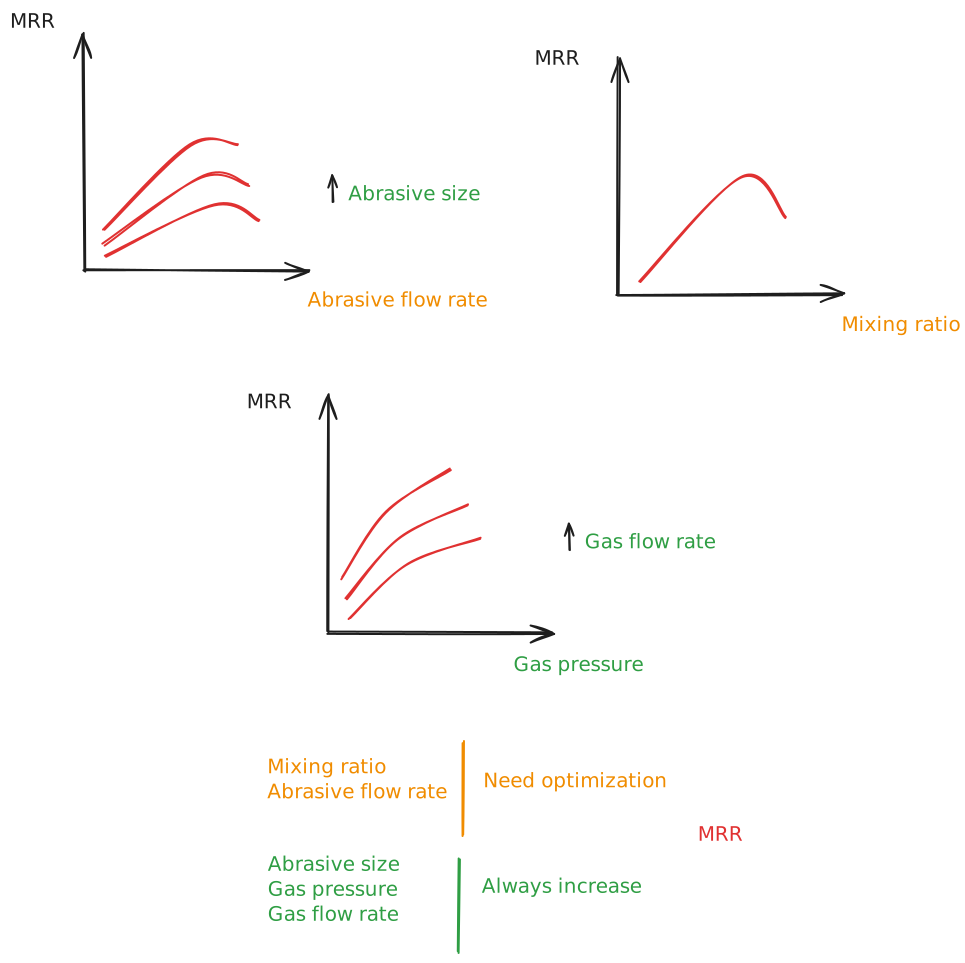
- Gas pressure (increases MRR)
- Gas flow rate (increases MRR)
- Abrasive jet
- Abrasive type (aluminum oxide, silicon carbide, dolomite, glass beads)
- Abrasive size (increase MRR)
- Abrasive flow rate (increase then decrease MRR)
- Mixing ratio (increase then decrease MRR)
- Abrasive shape (irregular vs. regular)
- Nozzle
- Material (Tungsten Carbide, Sapphire)
- Nozzle size
- Nozzle standoff (as it increases, depth of cut decreases but breadth of cut increases)